The Ballaghaderreen Town Team, supported by the Sustainable Energy Authority of Ireland, and Roscommon County Council, commissioned a full study of the energy uses of all sectors of the town. This study also measured the carbon emissions produced by this energy use. Energy Co-operatives Ireland Ltd has completed this report which provides a roadmap for reducing this energy use and generating as much as possible locally and sustainably.

The Ballaghaderreen SEC Energy Master Plan is funded and supported by the Sustainable Energy Authority of Ireland (SEAI) as part of it’s Sustainable Energy Communties program

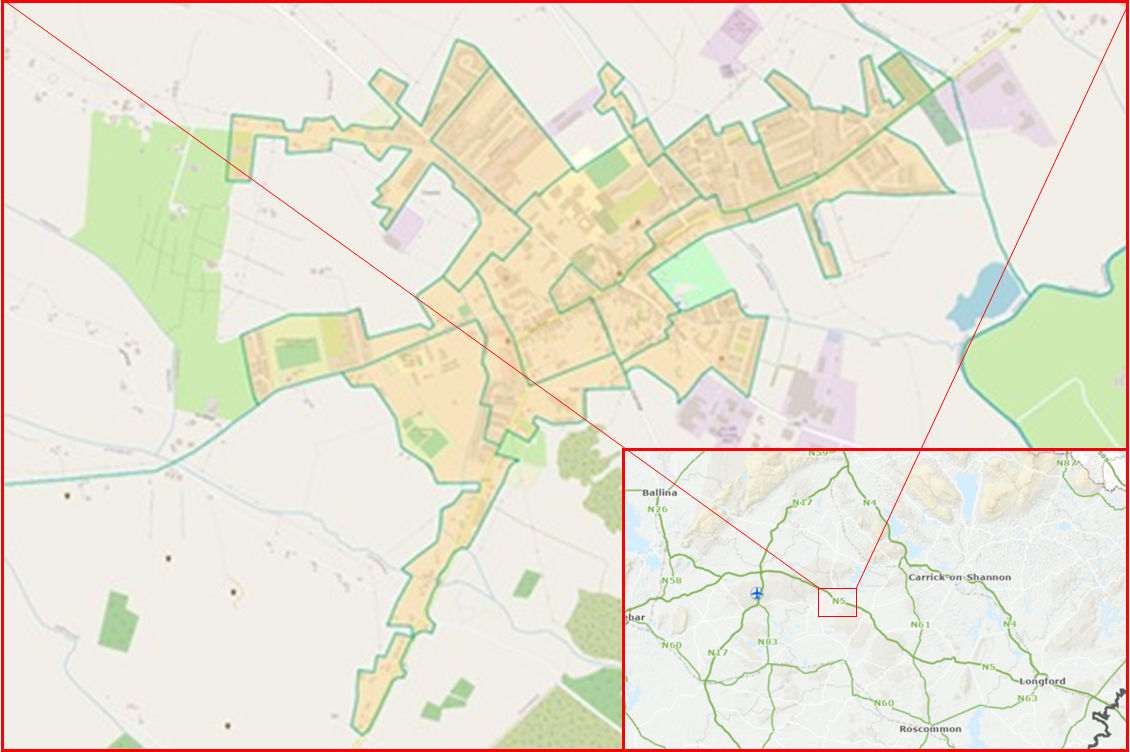
Ballaghaderreen SEC Area Map
Ballaghaderreen has the capacity to create 9MW of community owned renewable energy generation project – today. That’s 25% of its electrcity demand. No planning permissions or complex grid upgrades needed.
Find Out More Below>>
Save Energy, Cut Costs and reduce emissions – start from your home
Which of these homes in Ballaghaderreen is like yours? Find out how it could be made energy efficient
Many people qualify for fully funded upgrades – 100% grant supported
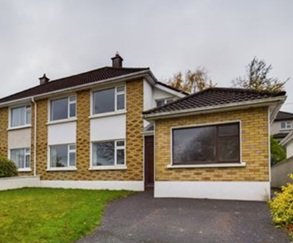
Semi-Detached, 1977
| Total Building Area (m2): | 112 |
| Current Condition | E1 |
| Post Works | A3 |
| Cost Savings | €3,583 |
| Cabon Saved (tree equivalent) | 536 |
| Est Cost of Works nett grant. | €36,700 |
| Payback in years | 10.2 |
| Report Summary | LINK >> |
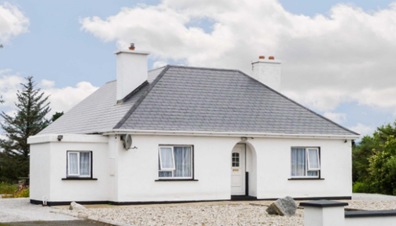
Detached, 1950
| Total Building Area (m2): | 104 |
| Current Condition | D2 |
| Post Works | B1 |
| Cost Savings | €1,231 |
| Cabon Saved (tree equivalent) | 243 |
| Est Cost of Works nett grant. | €41,700 |
| Payback in years | 14.8 |
| Report Summary | LINK >> |
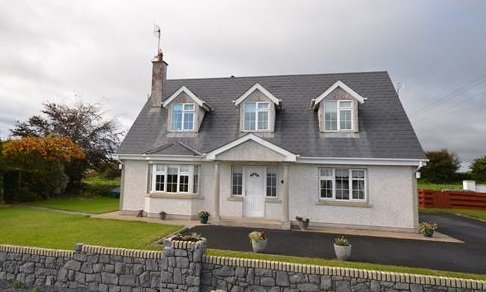
Detached, 1999
| Total Building Area (m2): | 184 |
| Current Condition | C1 |
| Post Works | A3 |
| Cost Savings | €2,415 |
| Cabon Saved (tree equivalent) | 400 |
| Est Cost of Works nett grant. | €41,900 |
| Payback in years | 17.3 |
| Report Summary | LINK >> |
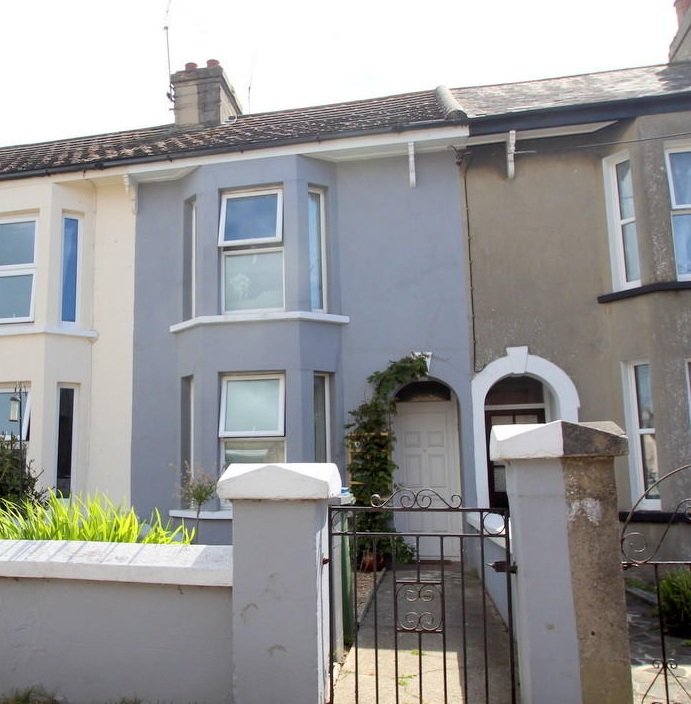
Mid Terrace 1920
| Total Building Area (m2): | 89 |
| Current Condition | D2 |
| Post Works | B1 |
| Cost Savings | €2,211 |
| Cabon Saved (tree equivalent) | 400 |
| Est Cost of Works nett grant. | €32,700 |
| Payback in years | 14.8 |
| Report Summary | LINK >> |
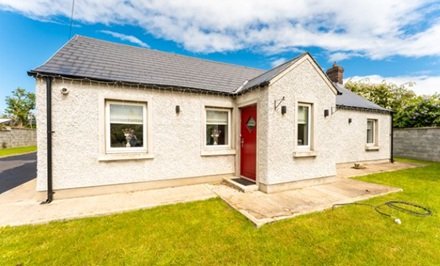
Detached, 1906
| Total Building Area (m2): | 65 |
| Current Condition | E2 |
| Post Works | B2 |
| Cost Savings | €2,026 |
| Cabon Saved (tree equivalent) | 321 |
| Est Cost of Works nett grant. | €39,700 |
| Payback in years | 19.6 |
| Report Summary | LINK >> |
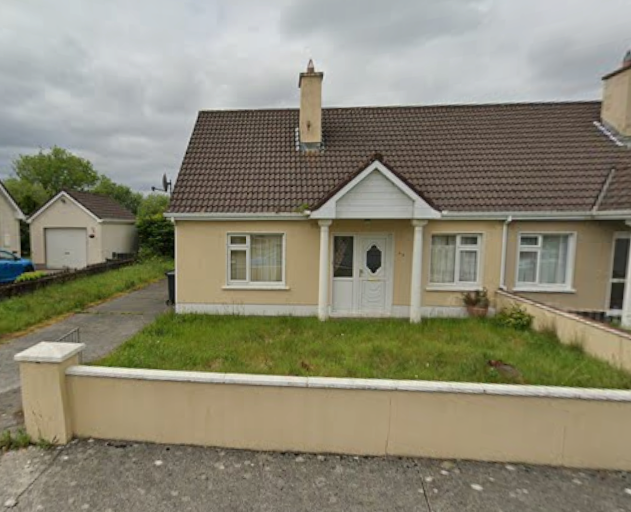
Semi-Detached, 1996
| Total Building Area (m2): | 106 |
| Current Condition | C2 |
| Post Works | A3 |
| Cost Savings | €2,026 |
| Cabon Saved (tree equivalent) | 321 |
| Est Cost of Works nett grant. | €39,700 |
| Payback in years | 19.6 |
| Report Summary | LINK >> |
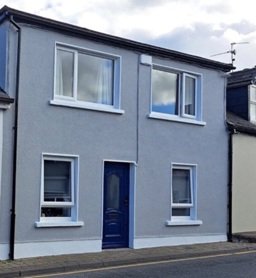
Mid Terrace, 1910
| Total Building Area (m2): | 137 |
| Current Condition | G |
| Post Works | B1 |
| Cost Savings | €7,379 |
| Cabon Saved (tree equivalent) | 1,479 |
| Est Cost of Works nett grant. | €32,700 |
| Payback in years | 4.4 |
| Report Summary | LINK >> |
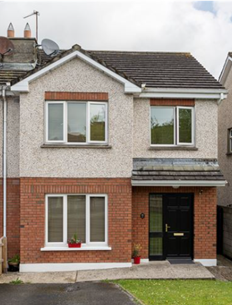
Semi-Detached, 2001
| Total Building Area (m2): | 103 |
| Current Condition | C2 |
| Post Works | A3 |
| Cost Savings | €1,711 |
| Cabon Saved (tree equivalent) | 243 |
| Est Cost of Works nett grant. | €41,000 |
| Payback in years | 22.8 |
| Report Summary | LINK >> |
What Supports are there for you to start your home future-proofing journey?
Fully Funded Upgrade
Qualifying* homeowners receiving certain welfare benefits: All home upgrade costs covered by SEAI
Service is managed by SEAI and includes:
- home survey
- contractor selection
- contractor works 100% funded
- follow up BER
Homes built and occupied before 2006
*Receiving one of:
- Fuel Allowance
- Job Seekers Allowance
- Working Family Payment
- One-Parent Family Payment
- Domiciliary Care Allowance
- Carers Allowance
- Disability Allowance
One Stop Shop Service
Based on set grants per measure, this can be grant funded by SEAI 45 – 50% of the cost for a typical family home
One Stop Shop contractor manages upgrade including:
- home energy assessment
- grant application
- project management
- upgrade to a minimum B2 BER
- contractor works
- homeowner pays for the works net of grant
- follow up BER
For homes built and occupied before:
- 2011 for insulation and heating controls
- 2011 for renewable systems
Individual Energy Upgrade Grants
Up to 80% of the cost of the upgrade for a typical family home with SEAI grants
Homeowners manage their own upgrades including:
- contractor selection
- grant application
- contractor works
- pay for full cost of works and claim grants afterwards
- follow up BER
For homes built and occupied before:
- 2011 for insulation and heating controls
- 2021 for heat pumps and renewable system
Typical costs of home improvements and the grants available to make them affordable
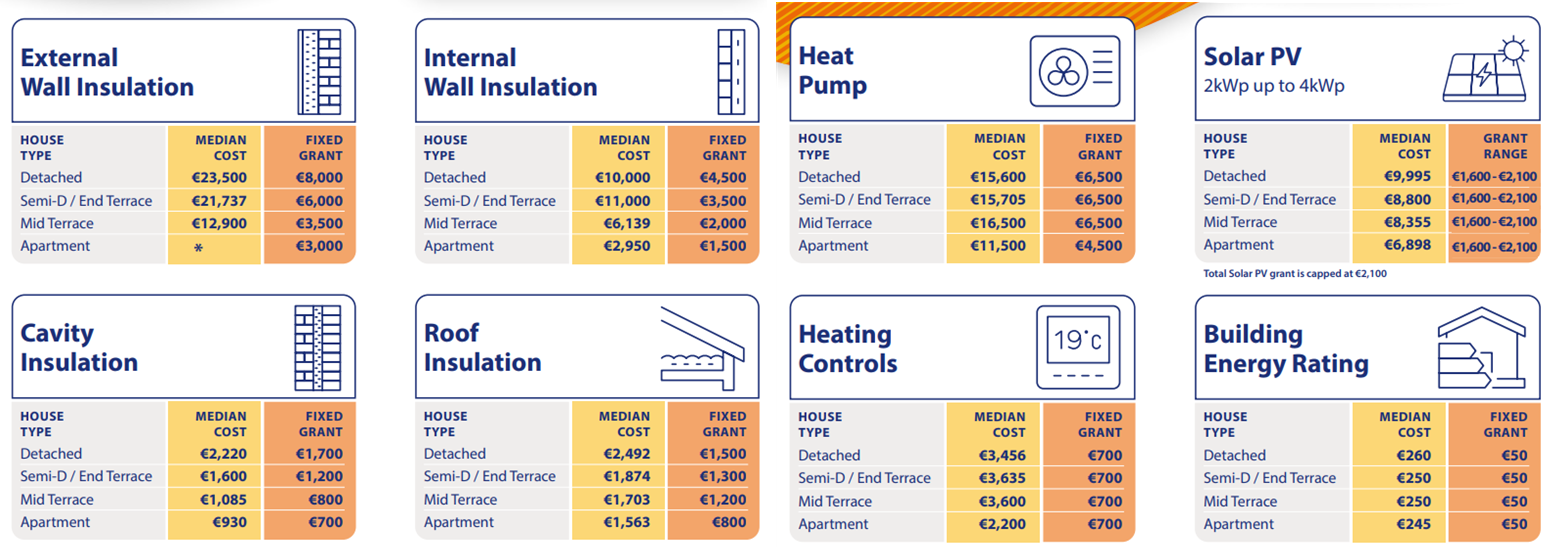
Individual actions for homeowners
…some quick and easy sustainability ‘wins’ to save you energy and money as well as reducing carbon emissions
Step 1: Do Your Own Audit:
- Check windows, external doors, vents, floor spaces, fireplaces, and stoves with a stick of incense: and track down and eliminate draughts.
- Check insulation levels in attic, basement, walls (including the meter box), and floors
- Check your boiler and stove; what age are they? When were they last serviced?
- Collect energy bills and scrutinise them over a year.
- To save money in the short term see if you need to change your electricity supplier.
Step 2: Actions to save 12% of your energy costs and fossil fuel use:
- Turn everything off – don’t leave on standby (2%)
- Use a clothes line when possible – no tumble dryer (7%)
- Wash clothes @ 30 degrees (1%)
- Turn off lights when not in a room, replace bulbs with highest rated LEDs possible (A+ read the lables not all LEDs are the same) – change as they go so as to spread the cost (2%).
Step 3: Save energy by thinking about the way you control and use heat
- Maintain room temperature 190C (this can save up to €350 every year for each degree lower you heat the house)
- Close the curtains at dusk to keep heat in the room that would otherwise be lost through the cold windows, and you could save up to 10% of your heating costs.
- Consider fitting shelves above radiators as they redirect the warm air that rises from them back into the room.
- Ventilate your house 3 to 5 minutes, a couple of times a day, instead of opening windows a little bit all day. Shut off your heating, during ventilation. This can reduce heat loss by 16%.
- Bleed your radiators regularly. If there is air in your radiator your boiler burns longer. Always start with the lowest and end with the highest radiator.
Home Retrofits: Make your home cozier, save money and reduce carbon emissions
Non-Domestic Buildings Support scheme for energy audits
Includes Schools, Community Buildings, Small and Medium Enterprises (SMEs): Many of these can achive 30% energy and cost reductions quickly without having to spend a lot
Eligibility
Businesses applying to the scheme must be:
- non-obligated entities
- tax compliant
- registered in the Republic of Ireland
- spend at least €10,000 on energy (exclusive of transport energy costs) per year at the site being audited
- There is a limit of 1 audit voucher per Applicant/Company
Electric Vehicles: Can save you thousands over the car’s lifetime
Comparing an EV costing €29,000 (with a 312km range) with a similar sized diesel car costing €26,000 shows that the EV is cheaper to run by €1,443 per year. Over a 10-year lifetime, you could save €21,034 by choosing the EV. This comparison is from the SEAI’s tool available for hundreds of models and makes LINK
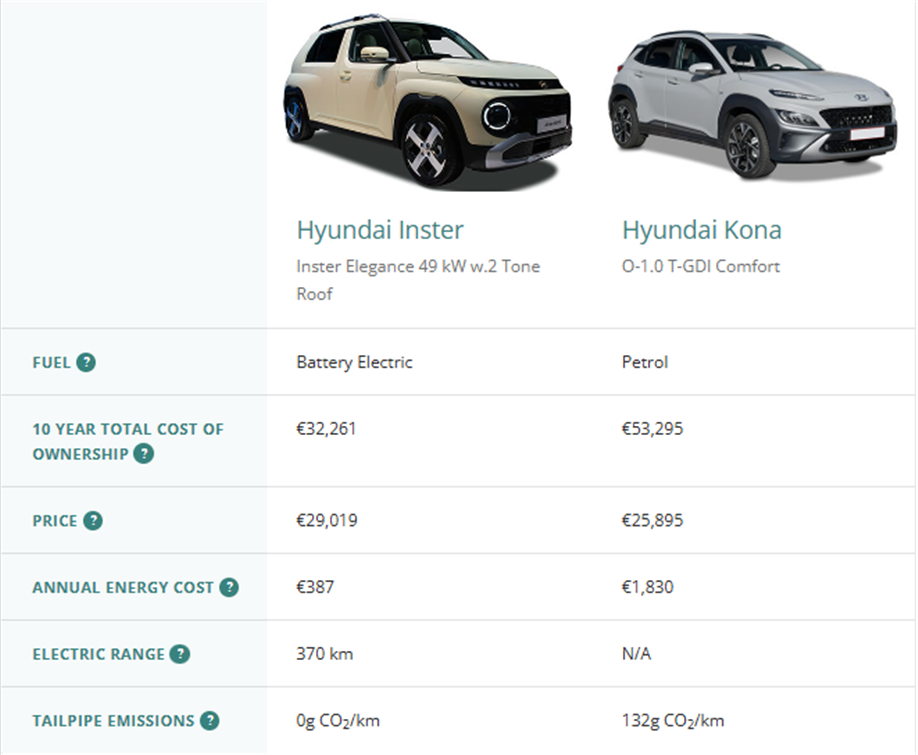
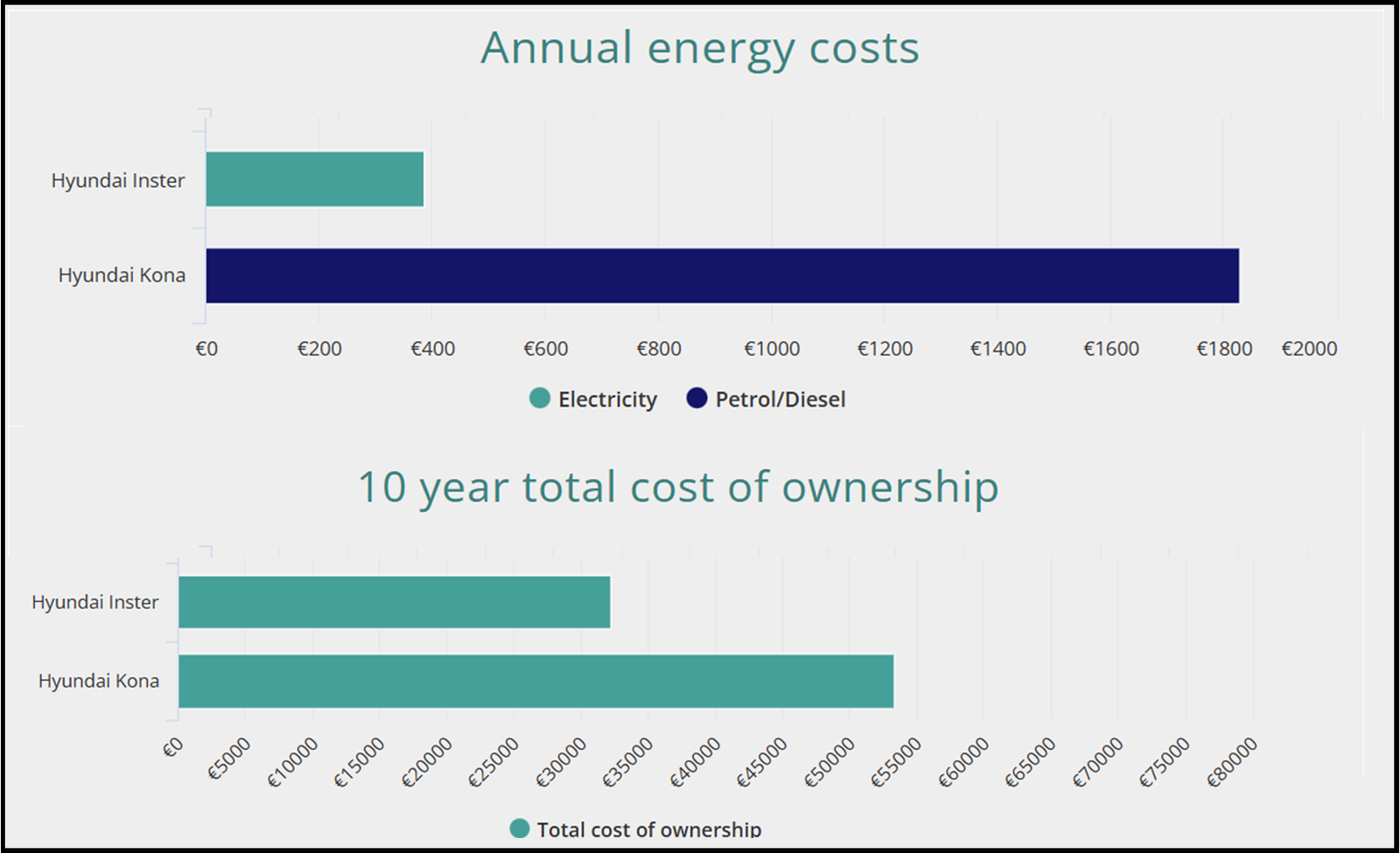
In Balllaghaderreen for more than 63% of commuters, the average journey time is less than 30 minutes probably within a distance of less than 30 kms. So a week’s commuting is well within the range of an EV on a single charge.
There is virtually nowhere in Ireland outside the 300kms of an EV range from Ballaghaderreen. We can presume that any return trip of amounting to more than 300km would involve a rest break of 1-2 hours.
A 9MW distributed power plant in Ballaghaderreen
Use the existing roof-spacewhere suitable for energy generation using PV. This will create a dispersed solar park not needing to overcome either planning or electricity grid re-enforcement obstacles. It will generate income locally and offset carbon emissions from grid electricity.
Non-domestic buildings in the SEC area account for approximately 69,840m2. Allowing for 65% of this space to be leveraged for PV would allow for the installation of 7.5 MW of PV in the SEC.
Such a micro-PV opportunity would result in an estimated €1,525,735 in locally retained value (between avoided costs and electricity supplier repayments) and 1,552 tCO2 avoided.
There are over 793 houses in the SEC (90% of all homes). Most of these are suitable for PV on the roof. It is very feasible for the town residents to install enough PV (1.6MW altogether) on homes that would save €408,443 in costs and reduce CO2 by 338 tonnes each year.
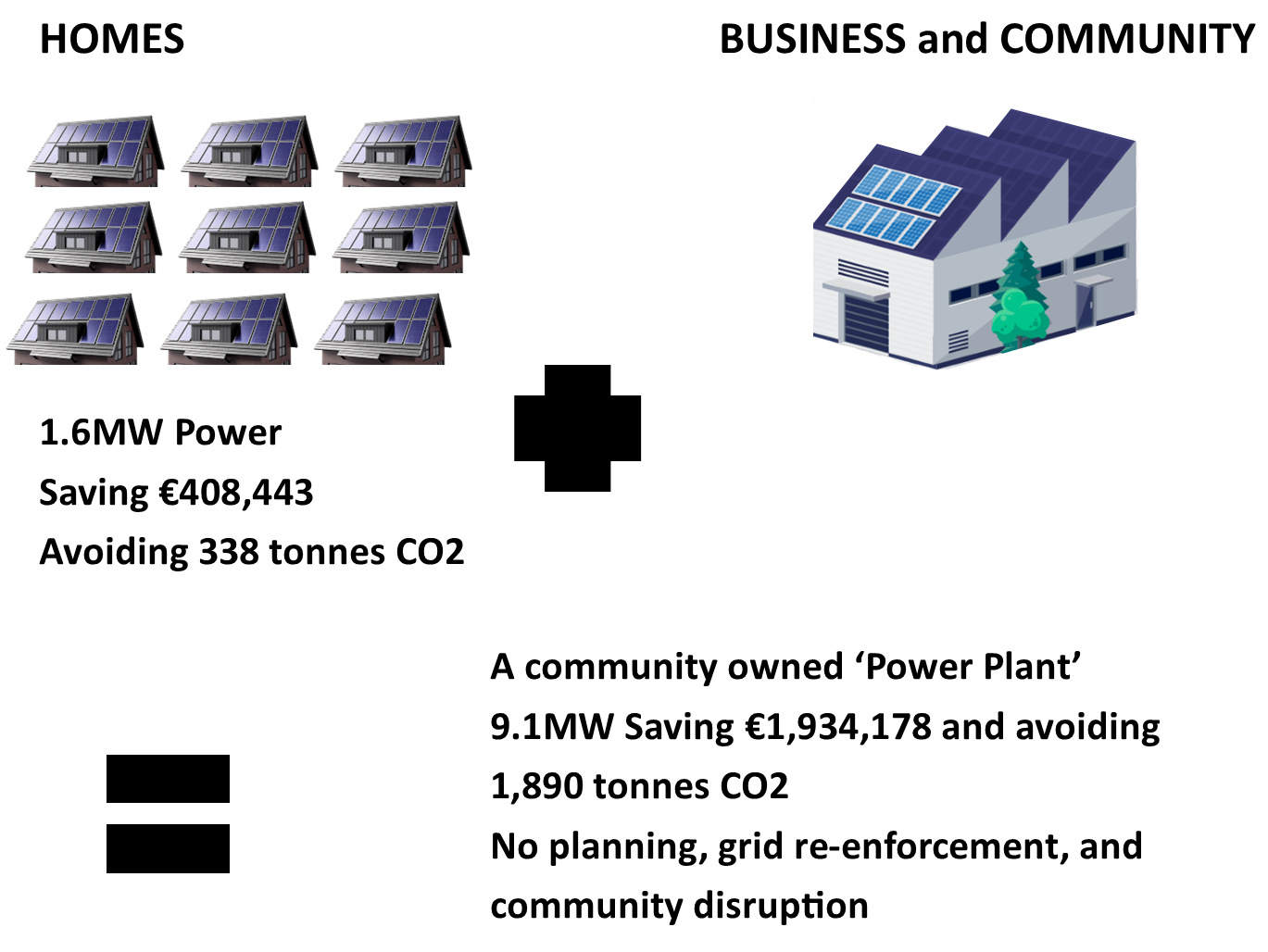
There are a large number of approaches to pay for the installations discussed below.
Photovoltaic (PV) in the home: make your own electricity and save money
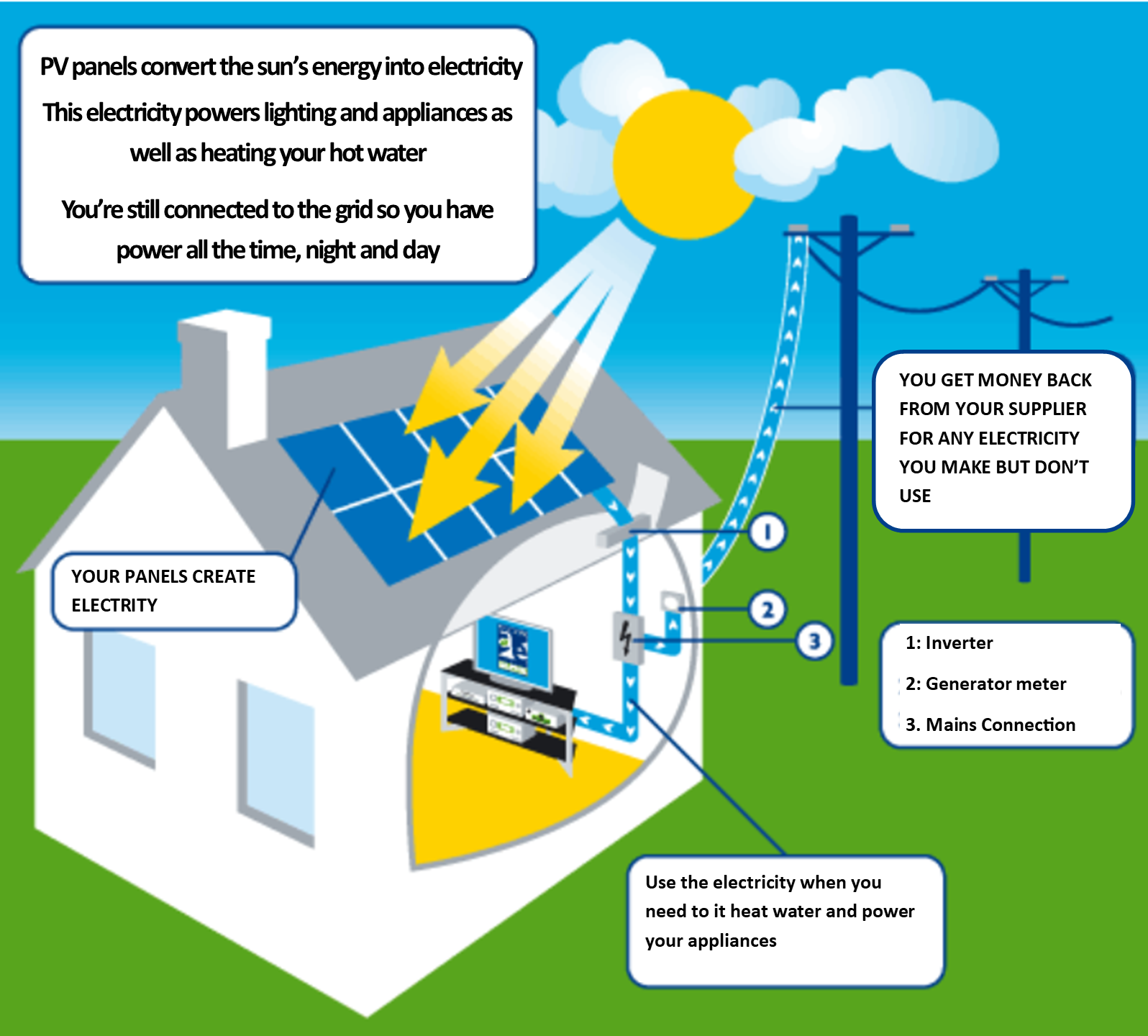
A domestic solar PV system consists of a number of solar panels mounted to your roof (or in your garden or adjacent field) and connected into the electrical loads within your building. Solar PV systems are rated in kilowatts (kWp). A 3kWp solar PV system would require about 12 solar panels on your roof needing about 8m2 of space, and will generate about 2,900 units of electricity (kWh) a year.
Since you pay about €0.31 per kWh to your electricity provider, a 3kW PV panel system (if the home is occupied during the day) could save the homeowner about €637 per year. There would also be an additional payment from the Clean Export Guarantee (CEG) Tariff (of up to €140 per year in this case). On an installation costing €4,800 (nett of SEAI grant of €1,600) this would achieve a simple payback of 6.1 years.
There is a significant grant incentive available from the SEAI for PV installation for homeowners. The full details are available at this link.
A Solar Meitheal is a community-led concept. Bringing homeowners together in a local area who want to install Solar Photovoltaic (PV) panels on their homes. This grouping makes it easier to:
- Source quotes from Solar PV suppliers and installers, through bulk purchases
- Simplify planning multiple installations in one community
- Help each other learn and succeed in carrying out a potentially challenging project
For Ballaghaderreen SEC it would be great first project for our local SEC to sink its teeth into.
SEAI has received feedback from different SECs on the benefits of the Solar Meitheal project;
“Implementing the Solar Meitheal program represents a powerful climate action with tangible and quantifiable effects on carbon reduction. By actively engaging the community in this initiative, we foster a collective sense of pride as we enhance each home or business by transitioning to solar photovoltaic (PV) systems.” Adam Calihman – Greystones & Delgany SEC
Ballaghaderreen SEC Solar Meitheal
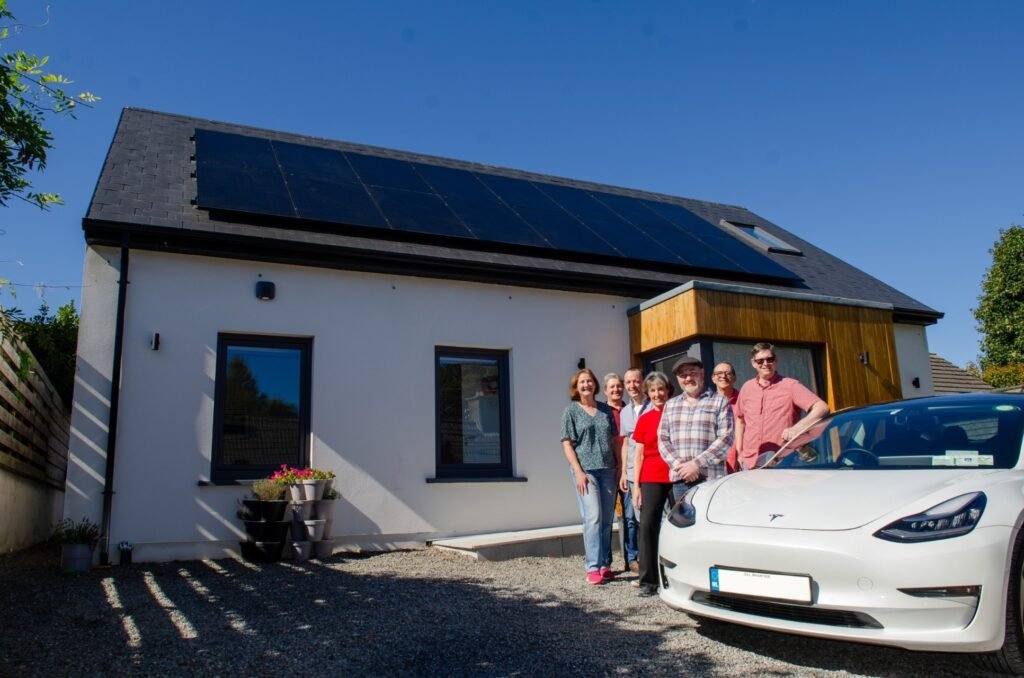
Members of the Greystones and Delgany SEC Solar Meitheal, Co. Wicklow. PIC: greystonesgreenenergy.ie
Express your interest in joining a Solar Meitheal in the Ballaghaderreen SEC area
Decarbonising Ballaghaderreen with PV: Two Approaches
Self-owned Approach
Where you apply to install as much PV as you can on your roof, at your premises, as possible. Get advice on your needs and what sized system is right for your business. Pay a licensed installer to install the system and recoup the grant.
Heat Merchants, Athlone and SEAI grants
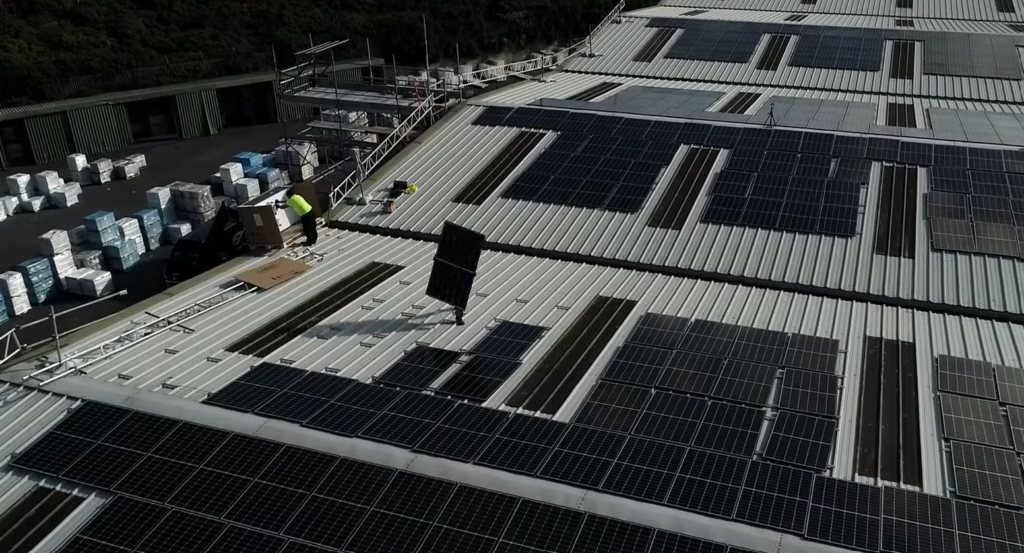
Heat Merchants Group, headquartered in Athlone decided they wanted to upgrade their premises.
Their proposal involved installing a large Solar PV array on the roof of their head office and central distribution centre. NextGen Power were their installation partner and they provided the design for the fitting. This comprised of 470 solar panels with a total output of 150kWp. The project aimed to provide 85% of the total annual energy consumption of the building.
The total cost of the works was €180,000 and 30% or €54,000 was funded through the grant: with a nett cost of €126,000 – the cost savings per year would today be approximately €19,507 – meaning the project would have a payback period of 6-7 years
Power Purchase Agreement Approach
This is where you enter into an agreement with a supplier. They pay for, install, and maintain the PV, and then sell you power at a cheaper rate than the grid.
Manhattan Peanuts, Dublin and UrbanVolt
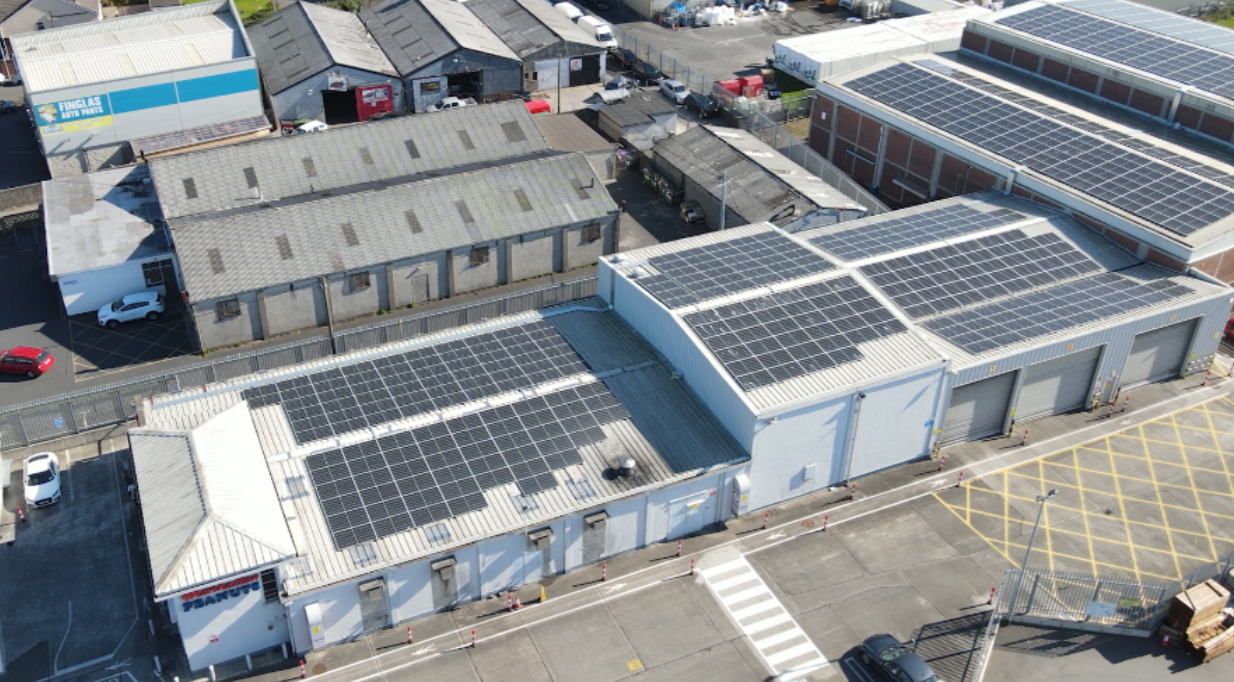
Solar System Size 275kw, with Carbon Reduction of 36,462kg annually. The system provides approximatey 40% of the factories energy demand.
Typically PPAs result in a set lower than grid price for energy, with no upfront cost to the building owners.
The large PV supply beng installed at Aurivo is on the basisi of a PPA with VERDE Energy Group
SME Energy Savings Case 1 – the Pub
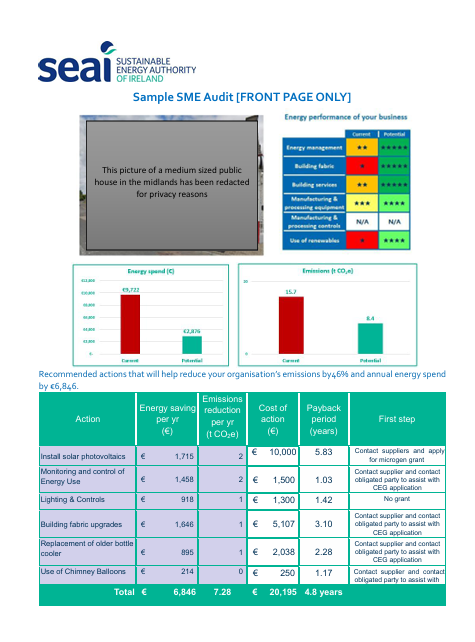
See how this pub was shown how to reduce energy costs by over €6,800 with a payback of just 4.9 years on efficiency investments and 7.3 tonnes CO2 avoided each year.

SME Energy Savings Case 2 – The Shop

A Hardware shop in Westmeath found out how to reduce it’s enegy bills by 93%(!) achieving a payback on efficiency measures of 5.2 years while reducing emissions by 11 tonnes of CO2.

Read a brief summary of the Baseline Energy Use Study of Ballaghaderreen.